Street photography is one of my favourite forms. I dare say that many of my best images, the most satisfying, were grabbed in a split second while out and about with my camera.
If this is a form of photography that interests you, then you should take a look at www.in-public.com. This site also has a host of links to other interesting resources and websites to do with street photography. Check out www.ak47.tv, an online magazine for documentary and art photographers, which has some excellent street stuff.
Many of the greatest photographers of our times were street photographers; notably Henri Cartier-Bresson and Brassai. Sometime in the future I'll do a small article with handy hints and tips for getting that special image when you're out there hunting with your camera.
As always I'd love to hear your feedback. So please email me.
May exhibition
On another matter my wife Magda and I have just launched our May exhibition on our website. Please take a look. Magda has an exhibition of exquisite flowers from A to Z and I'm exhibiting a series of portraits. You can see our exhibition by following the links from here. Please sign the guest book too. Your feedback is always valuable to us. Thanks.
Paul Indigo

Boy with his balloon - by Paul Indigo. I love his carefree attitude.
If this is a form of photography that interests you, then you should take a look at www.in-public.com. This site also has a host of links to other interesting resources and websites to do with street photography. Check out www.ak47.tv, an online magazine for documentary and art photographers, which has some excellent street stuff.
Many of the greatest photographers of our times were street photographers; notably Henri Cartier-Bresson and Brassai. Sometime in the future I'll do a small article with handy hints and tips for getting that special image when you're out there hunting with your camera.
As always I'd love to hear your feedback. So please email me.
May exhibition
On another matter my wife Magda and I have just launched our May exhibition on our website. Please take a look. Magda has an exhibition of exquisite flowers from A to Z and I'm exhibiting a series of portraits. You can see our exhibition by following the links from here. Please sign the guest book too. Your feedback is always valuable to us. Thanks.
Paul Indigo
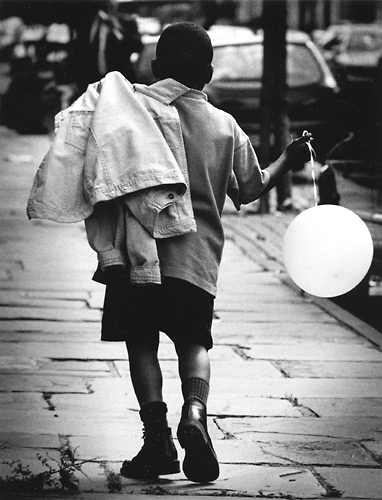
Boy with his balloon - by Paul Indigo. I love his carefree attitude.
Comments