Well as promised here's another installment about street photography.
When you're out wandering the streets with your camera there are basically two ways you can relate to your subjects. Either you try to capture them unaware or you make them aware you want to take a their picture. Both approaches have their own challenges of course.
In my previous article I dealt with trying to seize the moment, usually with the subject being unaware of you. Now I'll talk about making the subject aware that you want to take their picture.
Working in foreign countries and relating to people when you don't speak their language can be a challenge. On the other hand people will often cut a visitor more slack than they would someone from their own country, so you can 'get away' with more. The key to approaching people is those first few seconds. You have to appear non threatening, friendly, willing to explain why you want to photograph them, have a sense of humour and above all find a way to immediately engage the subject.
The greatest sensitivity you need is to know when the moment is there to take the picture. Waffle on for too long and they'll think you a bore and you're holding them up. Be too abrupt and they get upset with you 'cause you've imposed on them. That kind of sensitivity is hard to teach. It comes with experience, researching the culture and basic knowledge of people. Understanding body language is also key. Study up on these things and approach people with confidence. You're in charge of the situation, you're the photographer and you know what you're doing (without coming across as arrogant of course). Be firm and persuasive, and never too shy to ask someone to move to a spot or turn in the light, or something like that. People who you approach on the street are generally willing to help once they've agreed you can take their picture. They expect guidance and help from you.
Basically you're asking people to becoming partners in the creation of the image. And if anyone asks you for a print...please do send them one. It means such a lot to people if you do what you've promised.
Good luck. As always your feedback is welcome.
Paul Indigo

The man from Turkey with the turkey.
When you're out wandering the streets with your camera there are basically two ways you can relate to your subjects. Either you try to capture them unaware or you make them aware you want to take a their picture. Both approaches have their own challenges of course.
In my previous article I dealt with trying to seize the moment, usually with the subject being unaware of you. Now I'll talk about making the subject aware that you want to take their picture.
Working in foreign countries and relating to people when you don't speak their language can be a challenge. On the other hand people will often cut a visitor more slack than they would someone from their own country, so you can 'get away' with more. The key to approaching people is those first few seconds. You have to appear non threatening, friendly, willing to explain why you want to photograph them, have a sense of humour and above all find a way to immediately engage the subject.
The greatest sensitivity you need is to know when the moment is there to take the picture. Waffle on for too long and they'll think you a bore and you're holding them up. Be too abrupt and they get upset with you 'cause you've imposed on them. That kind of sensitivity is hard to teach. It comes with experience, researching the culture and basic knowledge of people. Understanding body language is also key. Study up on these things and approach people with confidence. You're in charge of the situation, you're the photographer and you know what you're doing (without coming across as arrogant of course). Be firm and persuasive, and never too shy to ask someone to move to a spot or turn in the light, or something like that. People who you approach on the street are generally willing to help once they've agreed you can take their picture. They expect guidance and help from you.
Basically you're asking people to becoming partners in the creation of the image. And if anyone asks you for a print...please do send them one. It means such a lot to people if you do what you've promised.
Good luck. As always your feedback is welcome.
Paul Indigo
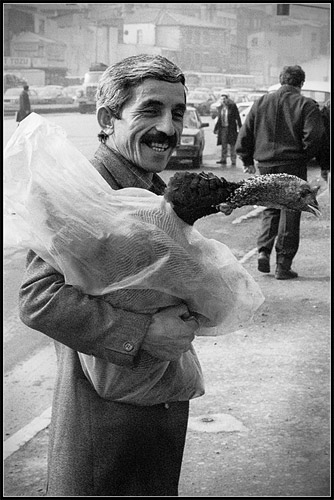
The man from Turkey with the turkey.
Comments