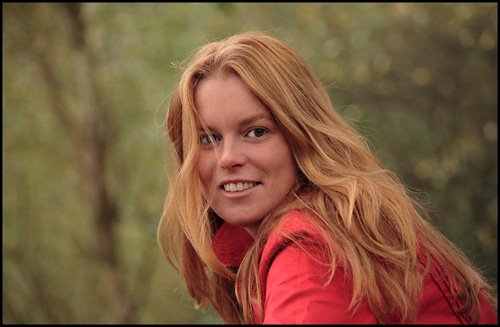
She absolutely loved this portrait. So does her husband. I was a little concerned about the strand of hair that blew across her eye but she felt it gave a more carefree and natural feel to the image. This was her favourite expression of the set of six I took in this pose.
Portrait photography, at least in the UK, seems to be moving increasingly out of the studio.
Instead of the stiff formal portraits with people dressed up in their best outfits, clients are now asking for informal reportage style images in a natural environment. The emphasis is on spontaneous and fun images which them at play and sometimes at work.
Some photographers may think this makes things easier because you're out of the confines of the studio, probably working without a tripod but if anything it's even harder to master this style than studio work. In the studio you can control the lighting, there's no variable weather to contend with, no curious passers-by and basically anything can happen.
So what qualities does the successful modern social portrait photographer need to possess?
As with all photography preperation is incredibly important. This includes scouting locations, considering options dependent on weather and studying when the light will be best to give the image that extra special something.
You have to be able to think on your feet, to be creative on the spot because no matter how well you are prepared things change and when they do you have to be able to turn potential disaster into wonderful opportunity.
The roles change subtly when you're outside the controlled environment of the studio. The photographer has to be more firm,assertive and in control, heading-off distractions and getting the best out of their subjects. If you're photographing people in their own home it's a little bit more challenging to direct them than when they are in your studio so you've got to confident and strong.
You need to have an eye for detail and tremendous awareness of everything around you. Backgrounds are constantly changing, the light is shifting and because your subjects move around a lot clothing can be in dissaray.You have to check everything all the time. Some classic examples of where an eye for detail counts are a gentleman’s tie slipping down a bit to reveal his top shirt button, a lady’s bra-strap showing, an unflattering or revealing bit of skin bulging out etc.
To photojournalists and fashion photographers used to working out and about a lot of the above is second nature and terribly obvious, but I think that there are many social portrait photographers, who want to work outside of their studios, who may underestimate the challenges.
Something else that adds to the difficulty of doing an exceptional job outside of the studio is that the images at first glance may look easy to accomplish. After all photographs of family and friends in natural environments are commonplace so the portrait photographer’s images will be compared to and have to compete with the everyday snapshot.
So how do you make your images really stand out? For me the answer goes beyond getting all the technical stuff right. You have to show real emotion, something that your subjects recognise as penetrating a deeper level. When they see your pictures they have to say, “Yes, that’s me. That is how I want the world to see me.”
As always I would be delighted to hear your thoughts and to learn from you.
Cheers,
Paul

Comments