Think of an image that really means something to you. Not just an image that is pleasing to look at and contemplate but something that really touches you. I bet the image tells a story. It may not be the most brilliantly realised picture in terms of technique, nor perhaps the perfect composition but something about it touches your emotions and moves you deeply.
In our world of over-hype the sheer volume of images that crash against our conciousness every waking minute is overwhelming. It's incredibly refreshing to reach over and look at the snapshot of a loved one, a favourite memory, perhaps something that makes you smile or evokes your empathy.
I find myself tremendously attracted to photojournalism again. Good 'old fashioned' story telling pictures that reveal the human condition and that go beyond the all too common overmanipulated and Photoshoped to death kitch view of a reality that does not exist outside cleverly enhanced pixels.
Of course digital and darkroom manipulation can work but they should only be put to use to enhance meaning, to reveal, rather than to mask reality. Every element in a picture should be there to help tell the story.
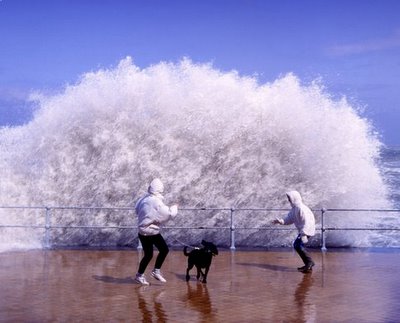
Below, a moment captured in Ostend when everyone and their dog was out dicing with the huge waves crashing against the promenade. Many people over the years have lost this game and been swept away. Happily these two and their dog made it and I was in the right place at the right time to capture the moment.

In our world of over-hype the sheer volume of images that crash against our conciousness every waking minute is overwhelming. It's incredibly refreshing to reach over and look at the snapshot of a loved one, a favourite memory, perhaps something that makes you smile or evokes your empathy.
I find myself tremendously attracted to photojournalism again. Good 'old fashioned' story telling pictures that reveal the human condition and that go beyond the all too common overmanipulated and Photoshoped to death kitch view of a reality that does not exist outside cleverly enhanced pixels.
Of course digital and darkroom manipulation can work but they should only be put to use to enhance meaning, to reveal, rather than to mask reality. Every element in a picture should be there to help tell the story.
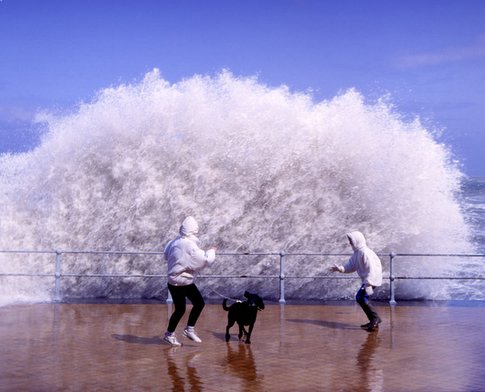
Below, a moment captured in Ostend when everyone and their dog was out dicing with the huge waves crashing against the promenade. Many people over the years have lost this game and been swept away. Happily these two and their dog made it and I was in the right place at the right time to capture the moment.

Comments